





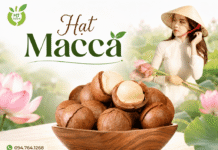
Where to buy Vietnamese macadamia nuts with a rich, buttery flavor?
Vietnamese macadamia nuts are becoming increasingly popular among families because of their rich, buttery flavor, pleasant texture, and versatility. They can be eaten on their own, blended into nut milk, added to cereal, or used in baked goods and snacks.
However, growing location alone does not determine quality. The variety, harvest time, drying method, packaging, and storage conditions can all affect the color, crunch, aroma, and flavor of the kernel.
When deciding where to buy Vietnamese macadamia nuts, shoppers should consider the growing region, product type, packaging date, and storage recommendations. These practical details can help reduce the risk of buying damp, shriveled, soft, or rancid-tasting nuts.

1. Why are Vietnamese macadamia nuts becoming more popular?
Macadamia nuts are an energy-dense food containing a significant amount of monounsaturated fat. They also provide fiber, plant-based protein, and several vitamins and minerals. When enjoyed in a reasonable portion as part of a balanced diet, they can be a convenient way to add variety and nutrients to everyday snacks.
One practical advantage of domestically grown macadamias is the potentially shorter journey from the growing region to the processing and distribution stages. When mature nuts are harvested at the right time, promptly husked, and properly dried, they can retain a delicate aroma, rich taste, and naturally crisp texture.
Shoppers may also find it easier to learn where the nuts were grown, how they were processed, and when they were packaged. These details matter because macadamias are high in fat and can lose quality when exposed to air, heat, light, or moisture for extended periods.
Vietnamese macadamias also avoid some of the international freight costs associated with imported products. However, the final price still depends on the season, nut size, kernel recovery, appearance, processing method, and product format. In-shell cracked macadamias, whole kernels, and split kernels are priced differently and serve different purposes.
It is important to remember that a Vietnamese origin does not automatically guarantee consistent quality. Enjoyable macadamias still depend on mature raw materials, appropriate drying, secure packaging, and proper storage after processing.
2. Notable macadamia-growing regions in Vietnam
Macadamia trees are grown in several areas across Vietnam’s Central Highlands and northern mountainous provinces. Each region has its own elevation, climate, soil conditions, and cultivation practices, which can influence nut size, kernel recovery, texture, and flavor.
In the Central Highlands, Dak Lak and Lam Dong are among the better-known growing areas. Some locations offer suitable temperatures, well-drained soil, and favorable conditions for developing commercial growing regions. Macadamias are also cultivated in Gia Lai and nearby provinces.
In northern Vietnam, macadamia cultivation has expanded in Dien Bien, Son La, Lai Chau, and several other mountainous provinces. Cooler conditions in suitable microclimates can support tree growth, flowering, and nut development. Actual quality still depends on the variety, local climate, tree age, orchard management, and harvest timing.
For this reason, it is not accurate to claim that nuts from one province are always larger, richer, or better than those from every other region. A more reliable approach is to consider the stated growing region together with the condition, aroma, texture, and flavor of the finished product.
When shopping, look for products that clearly identify the nuts as Vietnamese-grown and provide the specific growing region when available. More detailed information makes it easier to compare products, choose a preferred flavor profile, and evaluate consistency across repeat purchases.
3. How to choose flavorful Vietnamese macadamia nuts
For cracked in-shell macadamias, choose nuts with dry, relatively uniform shells and clean cuts that make them easy to open. The shells should not appear damp, moldy, unusually dusty, or have an unpleasant odor. Large shells may look appealing and be convenient to handle, but size alone does not determine kernel quality.
Good macadamia kernels are generally creamy white to pale golden, with a dry surface, mild aroma, and rich, buttery flavor. They should have a pleasant crunch without feeling soft or stale. Avoid kernels with a harsh bitterness, musty smell, or lingering old-oil taste. Minor color variations may occur depending on the variety and processing method.
Whole kernels are visually appealing and work well for snacking, serving to guests, or giving as gifts. Split kernels may be a more economical choice for making nut milk, blending into flour, baking, or cooking. Their nutritional use can be just as practical when freshness, flavor, and storage conditions are comparable.
Check the packaging date, expiration date, net weight, and storage directions before buying. The package should seal tightly to limit exposure to air and moisture. Do not rely only on promotional phrases such as “extra-large nuts” or “premium grade” without evaluating the product details and the condition of the kernels.
After opening the package, reseal it immediately after each use. Store macadamias in a cool, dry place away from sunlight and heat. If purchasing a larger quantity or using the nuts slowly, divide them into smaller airtight containers and follow the seller’s storage recommendations to help preserve their flavor and texture.
Because macadamias are energy-dense, a serving of about 20–30 grams can be easier to incorporate into a balanced daily diet than eating directly from a large package. Anyone with a tree nut allergy should avoid macadamias unless a qualified healthcare professional advises otherwise.

4. Where can you buy Vietnamese macadamia nuts with convenient delivery?
When choosing a seller, look for clear descriptions of the growing region, product type, package size, processing method, and intended use. A knowledgeable seller should also be able to explain the differences between cracked in-shell nuts, whole kernels, and split kernels so customers can select the right option without paying extra for appearance they may not need.
HTFood offers several types of Vietnamese macadamia nuts for direct snacking, making nut milk, baking, cooking, and everyday household use. Available options include cracked in-shell macadamias, whole kernels, and split kernels for different preferences and budgets.
Before ordering, ask about the product format, package size, packaging date, storage recommendations, and delivery method. First-time customers may prefer a smaller package to evaluate the aroma, crunch, and overall flavor before purchasing a larger quantity.
If you are wondering where to buy Vietnamese macadamia nuts, contact HTFood for help choosing a product that matches your intended use and for delivery support. Selecting the right format from the beginning can make the nuts easier to use, help manage costs, and allow you to enjoy the distinctive flavor of Vietnamese-grown macadamias.
THÔNG TIN LIÊN HỆ
Hạt Dinh Dưỡng HTFood Việt Nam
SĐT/WhatsApp: 094.764.1268